Constructivism
Constructivism is a theory based on the idea that knowledge is constructed by the learner rather than being taught to the learner. Through constructivism, tamariki build connections with prior knowledge, are active participants in the learning process, and experiences are learner-centred, building on learners' interests.

How does Constructivism inform the teaching of Maths and Science in the Early Years?
- Encourage hands-on learning and exploration.
- Encourage collaboration and shared learning.
- Encourage mathematical conversations.
- Allow children to investigate, experiment and learn through trial and error.
- Allow tamariki to make their own connections and discover patterns.
- Encourage children to explain their thinking rather than relying on memorisation.
During your teaching practice, think about the 'Capabilities across the phases' to incorporate from the New Zealand Curriculum Mathematics and Statistics Years 0-10 2026 document. Learners develop communication, collaboration, self-management, problem-solving, and creativity capabilities through investigating, connecting and representing situations, generalising, and explaining and justifying findings. Together, these capabilities enable students to use maths and statistics confidently in other contexts.

Bruner's Mode of Learning
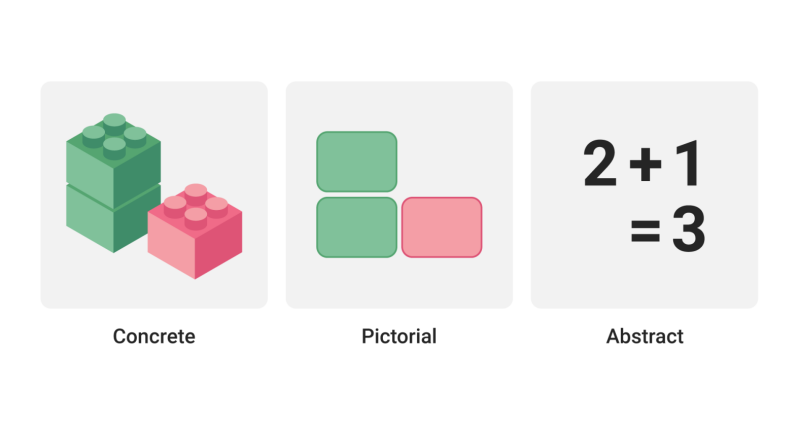
Jerome Bruner's Theory of Development was based on the theory that children learn best when they go from concrete to abstract in a three-step process.
- Concrete, also referred to as "enactive representation", is the first phase. This looks like hands-on learning through physical actions and manipulating materials.
- Pictorial, also referred to as "iconic representation", is the second phase. This moves to visual learning through images, drawings, diagrams and visual representations.
- Abstract, also referred to as "symbolic representation", is the final phase. This step is learning through numbers, words, mathematical symbols and explanations.
The three stages support children's understanding by moving from practical experiences towards more abstract thinking.
These phases are important for learning maths because learners use concrete materials and can see and make sense of what is happening. There is no age or stage limit for any of the phases, and concrete resources can be used at every level. Learners benefit from the use of physical resources as they promote reasoning and discussion, enabling tamariki to articulate and explain a concept.
Measuring Perimeter
A practical example of constructivism in the classroom is a lesson the kaiako taught on measuring perimeter. The learning intention was to understand how to measure the perimeter of a shape using non-standard units.
The resources needed were:
- Chalk
- Carpet Space
- Pencils
- Unifix cubes
- Hands
- Paperclips
Activity
- Children used chalk to draw shapes on the carpet.
- They measured the perimeter using different non-standard units.
- The non-standard units were deliberately different lengths.
- Students recorded their measurements collectively on an A3 sheet on the whiteboard.
- The class came together to discuss their findings.
What children discovered:
- The larger the unit, the smaller the number.
- The smaller the unit, the larger the number.
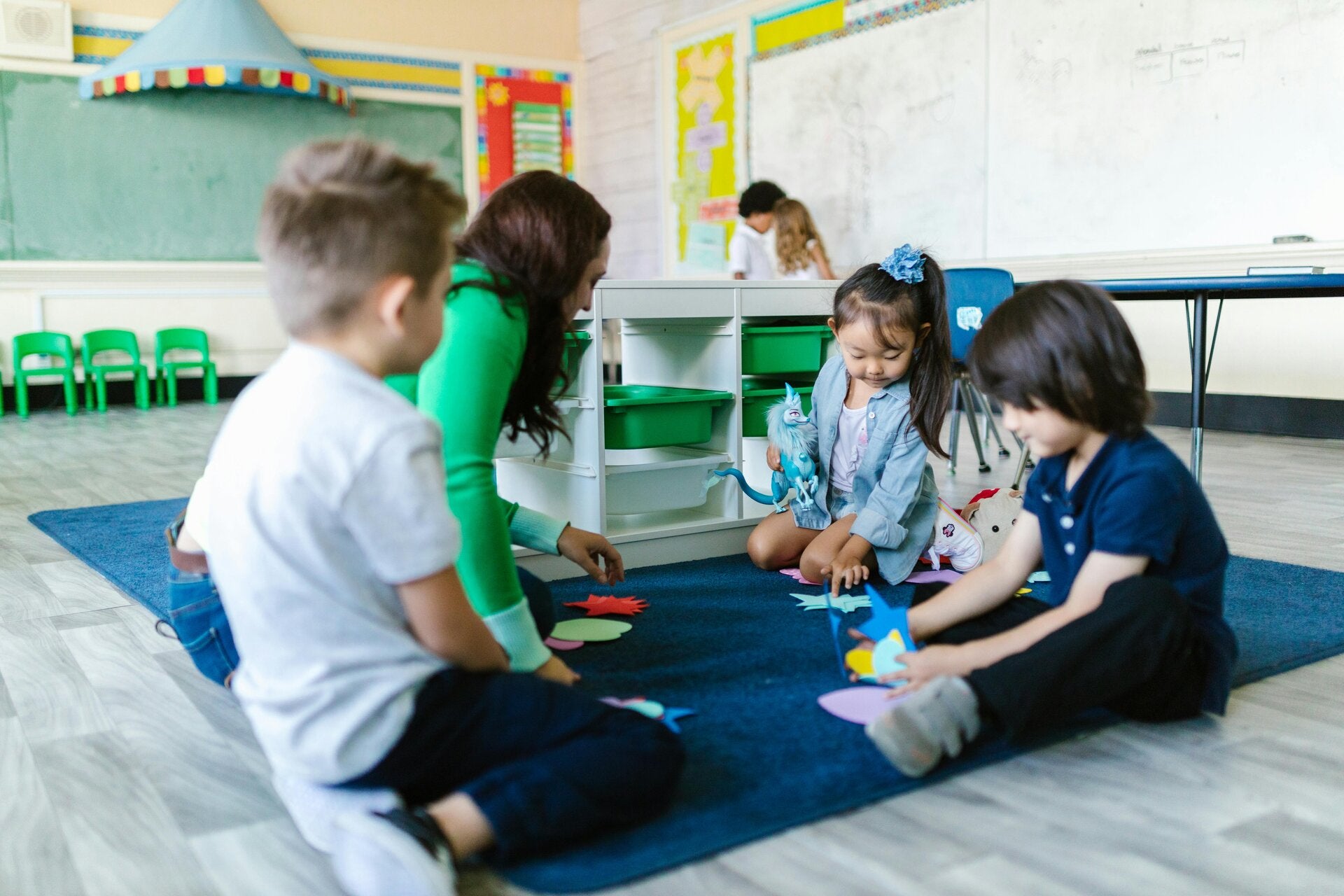
This rich maths experience demonstrates constructivism because children explored the concepts themselves through hands-on experiences, experimentation, discussion, and reflection. Through Bruner's model, we encouraged the use of physical materials like pencils, cubes, and paperclips to represent concrete learning. Then, by encouraging students to give collaborative explanations of their investigations, we worked into the last phase of abstract thinking.
Create Your Own Website With Webador